
THE CENTRAL INDIAN RIVER LAGOON – MAY 2013 FORECAST
I am looking forward to May and June because I can target larger species of fish in every venue available in the Sebastian area. I can break free of the inland waters regularly to seek out the big boys migrating up the coast, target big snook around shoreline structure without worrying if last nights cold front turned them off, and confidently pursue tarpon throughout the Sebastian River system. All fishing methods, from live bait to fly rod are also at home in each of these situations, thus making it possible for anglers of all experience levels to score a trophy size catch. The fish are here so let’s look at what and where we should be fishing during these big fish days of late spring/early summer.
(For more photos, visit our Gallery)
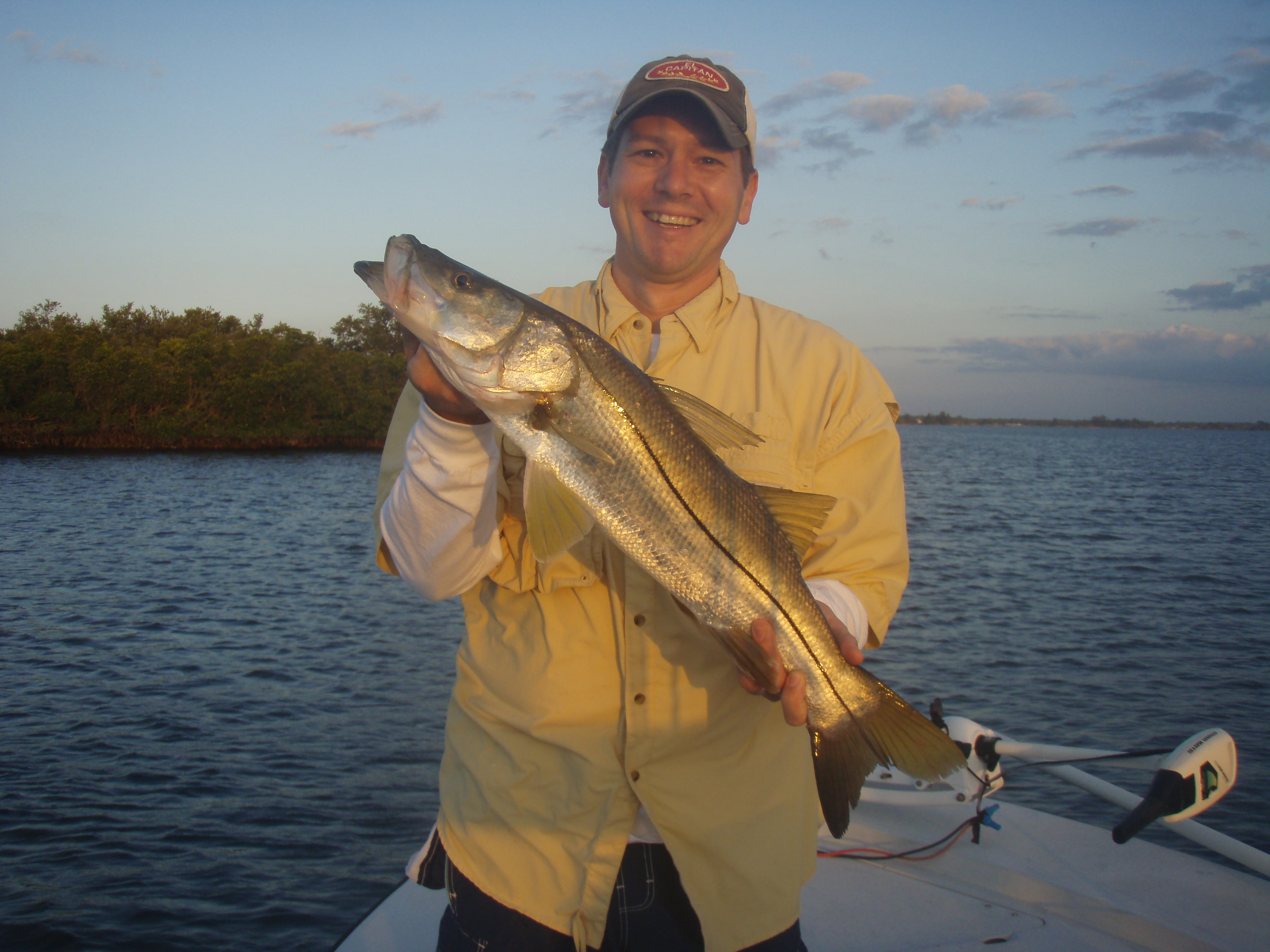
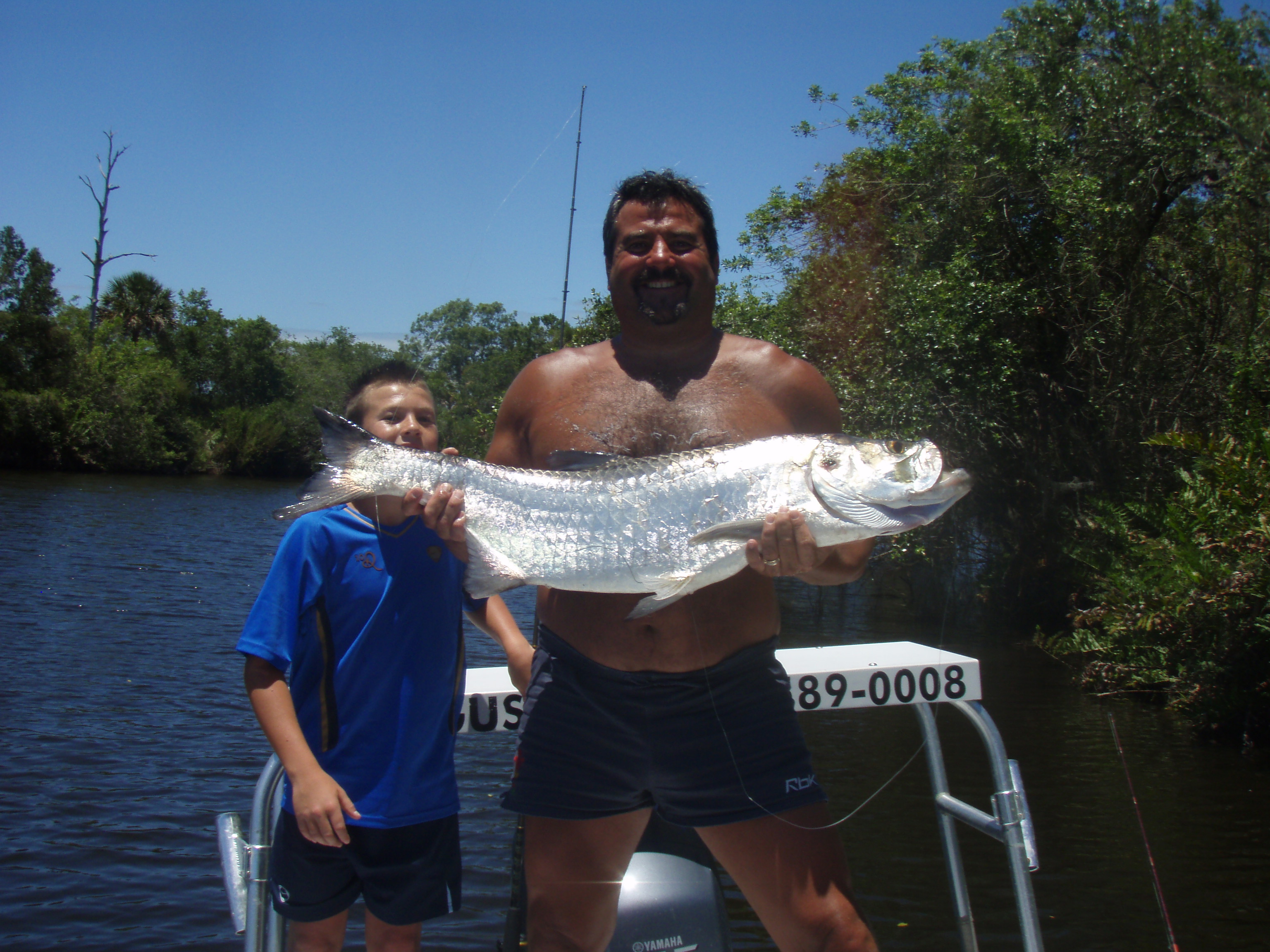
Sebastian River – Late spring is “the season” for the Sebastian River and many of the other freshwater feeders that flow into the central Indian River Lagoon. Tarpon and Snook of all sizes are at their highest concentrations of the season and they are eager to feed on the vast numbers, and varieties of baitfish that take up residence in this lower salinity, tannin stained water. Seven to ten inch mullet are the most obvious of these baitfish species and are the preferred choice of the larger Snook and tarpon in the river. Large live mullet fished on stout tackle in the lower Sebastian River are the ticket for the trophy snook (yes I said snook, they didn’t all die See Photo), and the occasional 50+ pound tarpon. Large topwater and shallow diving plugs are excellent choices after dark as well. Up the north and south forks of the Sebastian River live finger mullet, small diving plugs, D.O.A. shrimp and Terror-Eyz baits will produce Snook and tarpon of all sizes throughout the day. This is also the prime time for fly fishermen to stretch their line on the juvenile tarpon in the Sebastian River. Two to four inch baitfish patterns in white are the local favorite.
The Indian River Lagoon – Solid trout in the 18-23 inch class have been available this spring, with some larger individuals starting to show up (See Photo). Some of the largest trout of the year are taken in May, with topwater plugs and jerk-baits being the best artificial baits. Live mullet, pigfish and shrimp will also account for their share of seatrout and reds. The redfish catches since the first of the year have been the best I can remember since the stocking in the late 90’s. Most of my clients 100 or so reds have come on live shrimp, but as waters warm and baitfish invade the grass beds the reds will be more receptive to spoons, plugs and jerk-baits. Snook will become a more consistent catch in the lagoon in May. Docks, mangrove shorelines, downed trees and even potholes on the flats will begin to hold more snook of all sizes. I am seeing some snook lying around sunning, but numbers are down due to the freeze. D.O.A. shrimp, weed-less jerkbaits, and top-water plugs are my favorites to draw strikes from snook in and around cover. Twenty pound power pro braided line is a must for muscling snook from barnacle encrusted cover.
Sebastian Inlet – Snook and redfish should be a consistent catch at the inlet this May both night and day. Daytime anglers with the right live baits will score on both incoming and outgoing tides around the tips of both jetties. Nighttime boaters drifting live bait through the center of the A1A Bridge should catch good numbers of reds and snook. Land bound anglers throwing buck tails; storm and tsunami swim-baits and diving plugs can expect good results after dark. Expect this action to continue and get better as water temperatures increase with the approach of summer. As of mid April, not much has happened because ocean and lagoon water temps are still recovering from the coldest winter on record. Snook will continue to be out of season through May and the summer.
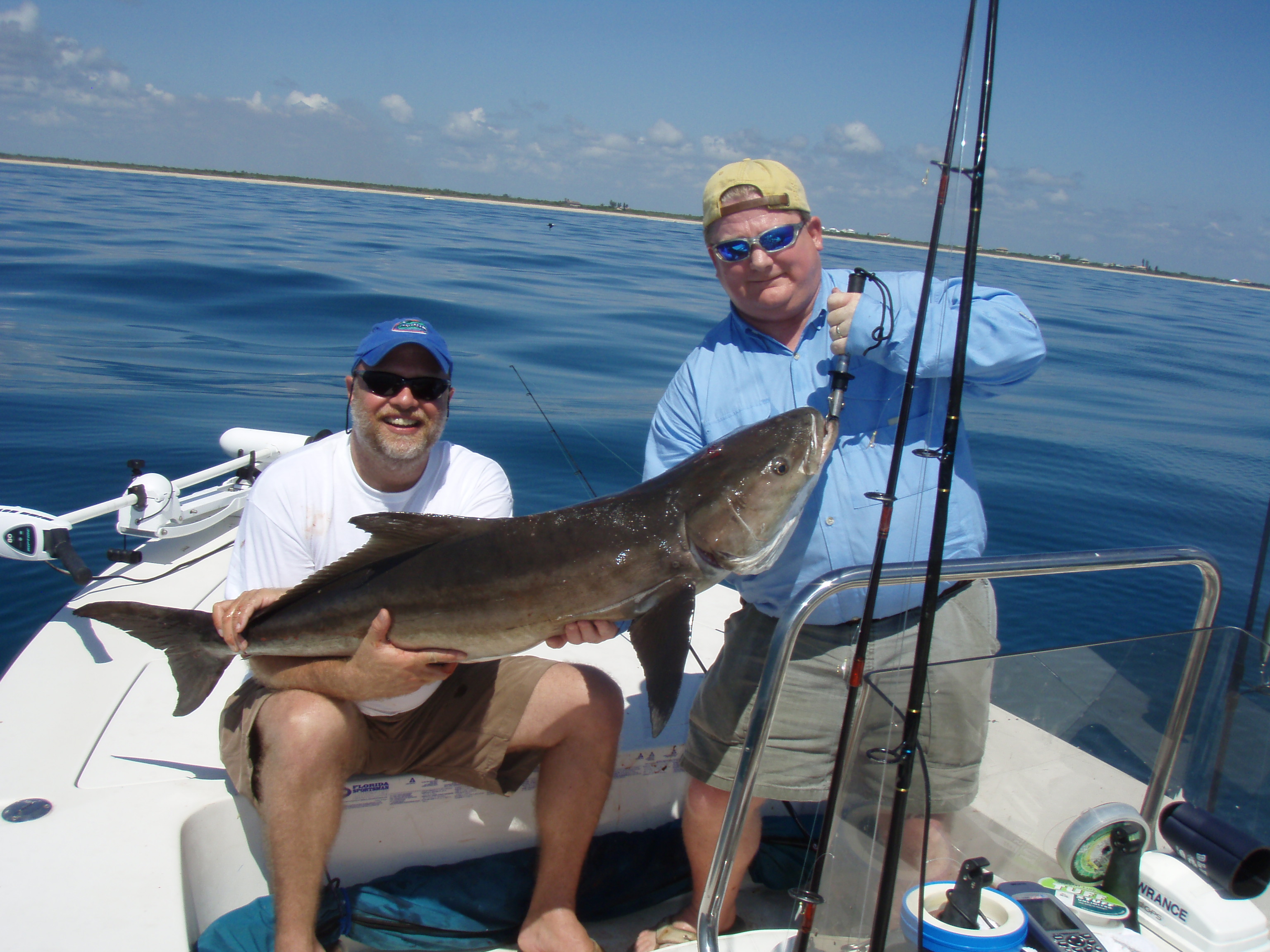
The Near shore Atlantic– Last but not least the waters from the beach out to five or so miles. This fishery is what I wait for all year. As the winds of April subside, the near shore waters clear and warm attracting a variety of baitfish and the game fish that prey on them. Glass minnows and threadfin herring or greenies are the two bait species most commonly at the bottom of the food chain in the near shore waters off Sebastian. I generally start my day by cast netting about ten live bait size mullet. This assures me that from the moment I leave the inlet I have the ability to catch anything I encounter along the beaches. Tarpon to 150# are probably the most sought after coastal fish, but Jack Crevalle to 40 pounds are also worth tossing baits to. I also always have a rod rigged with a sabiki rig while running the beach. This is for catching the greenies that are the best bait for just about everything out there. Watch for schools dimpling the surface or watch the bottom machine as you run along. What I like to do in the near shore waters starting this time of year is slow trolling for king mackerel. Live mullet and/or greenies on a stinger rig and slow trolled at between 1.5 and 2.5 knots will catch anything you happen across especially kingfish to 40 or so pounds. I run light conventional and heavy spinning gear with 15 to 20 pound monofilament for the big stuff outside the inlet. Another crowd pleaser that happens between May and July is the bonito (little tunny) and everything else that come in shore to gorge on the swarms of glass minnows that generally make an appearance in the late spring and early summer. It is a true blitz with Spanish and bonito taking small flies, plugs and jigs up top while tarpon, kingfish, jacks and sharks hang underneath eating the greenies and other baitfish that come to eat the scraps left over by the surface predators. This is a great opportunity for fly fishermen to catch everything from 1 pound Spanish to 100# tarpon and sharks.
Tight Lines,
Capt. Gus Brugger
772-589-0008
www.sebastianfishingguides.com
Capt. Gus Brugger is a full time inshore fishing guide with over 15 years of charter fishing experience in the Sebastian area. He and his 18’ Maverick flats skiff the Pattern Setter are available for charter by one to three anglers with reservations. Captain Hiram’s Resort is home base for Pattern Setter Charters and is a perfect get away for serious anglers or family fun. Give Gus a call today and book a trip to east central Florida’s finest fishing destination.